Food, alcohol and travel on GLP-1 medication
Eating changes when you are on Mounjaro, Wegovy or the Wegovy pill. Alcohol changes too. Travel gets logistically more complicated for the injectables, much easier for the tablet. Practical guidance for all three.
Wondering what this means for you? We can help. Talk to a doctor about weight loss.
This article covers the three everyday things that change when you are on GLP-1 medication: what you eat, how you drink, and what it takes to travel with the medication. The core medical content on side effects and monitoring lives elsewhere; this is the practical lifestyle note.
Food
Your appetite is smaller than it was. You fill up on less food than before. The foods that used to appeal no longer appeal the same way. These changes are the medication doing its job. Three practical principles help you do this well.
Prioritise protein. When you eat less total food, the macronutrient at greatest risk of deficit is protein. Inadequate protein causes lean-mass loss, which worsens the long-term weight trajectory (muscle burns calories at rest; losing muscle lowers your metabolic rate). Target 1.2 to 1.5g of protein per kg of bodyweight per day. For an 80kg adult, that is 96-120g per day. Realistic examples: Greek yoghurt at breakfast, chicken or fish at lunch, a protein-rich dinner, perhaps a whey-protein drink if intake is struggling.
Keep meals small and frequent rather than large and sparse. Large meals cause the most dramatic nausea and reflux because your stomach empties more slowly than normal. Three small meals plus a protein snack works better than two large meals.
Pay attention to fats, not calories. Very low-fat eating is unnecessary. Very high-fat eating (especially from ultra-processed sources) tends to trigger the worst nausea and reflux on GLP-1 medication. Aim for moderate fat from whole sources (olive oil, nuts, avocado, oily fish) and minimise deep-fried and heavily-processed fatty foods.
What some patients find helps:
Eating a large breakfast with the day's biggest meal in the morning, smaller lunch and dinner.
Avoiding carb-heavy meals when nauseated; protein is often better tolerated.
Preparing food rather than ordering; the convenience foods of modern life are often the worst-tolerated.
Keeping a food log for the first 6 weeks. Patterns emerge: specific foods that trigger nausea, specific times of day when appetite is lowest.
If you are on the Wegovy pill, the morning routine matters more than anything else
The Wegovy pill is the only one of the medications with a strict food-timing rule, and the rule shapes every day on treatment.
The tablet must be taken on an empty stomach, with no more than 120ml of plain water, at least 30 minutes before any food, any other drink, or any other medication. The 30-minute window is for absorption: only about 0.4 to 1 percent of each dose reaches the bloodstream even with the window honoured, and eating or drinking too soon cuts that to almost nothing.
Practical implications:
Coffee before the tablet does not work. Black coffee, white coffee, decaf coffee, all break the window.
Tea breaks the window. Herbal tea breaks the window.
The morning tablet for blood pressure or thyroid medication breaks the window. We sequence your other morning medication around it.
Fruit juice, milk, oat milk, even a sip of someone else's drink breaks the window.
Smoothies for breakfast straight after waking will not work as a morning routine on the Wegovy pill.
What does work: tablet first, plain water, get dressed and ready, breakfast 30 to 45 minutes later. Many patients use the time to walk the dog, do morning emails, take a shower. By the time the window has closed, the day's first food and the rest of the day's medication can happen normally.
Beyond the morning window, the food guidance on the Wegovy pill is the same as on the injectables: protein-forward, smaller and more frequent meals, moderate fats, less of the ultra-processed stuff.
Alcohol
This is often the biggest lifestyle change patients do not expect.
What changes: many patients describe reduced enjoyment of alcohol. Beer fills you up fast. Wine tastes less appealing. A single drink produces the effect a patient would previously get from two or three. Tolerance is clearly reduced.
Why this happens: partly because slowed gastric emptying means alcohol is absorbed slower (paradoxically leading to higher peak blood levels later). Partly because GLP-1 signalling seems to reduce the reward response to alcohol as well as to food. Some patients report their relationship with alcohol changes profoundly on GLP-1 medication.
Safety: there is a genuine safety note here. Alcohol plus reduced food intake plus slowed gastric emptying can produce unpredictable blood alcohol levels. Drinking large amounts while underfed is a real risk. We advise:
Do not drink on days when you have eaten very little.
If you drink, eat some food first (even a small amount slows absorption of alcohol sensibly).
Stop at the point where you feel the effect; you will reach it faster than you are used to.
Avoid binge drinking entirely during treatment.
Pancreatitis: alcohol is a well-known trigger for pancreatitis. Pancreatitis is a rare but real side effect of GLP-1 medication. Combining heavy alcohol use with GLP-1 medication increases the risk above background. We strongly advise against heavy or binge drinking during treatment.
Good news for many patients: if your relationship with alcohol has been problematic, GLP-1 medication sometimes makes moderation much easier. Several research groups are now studying GLP-1s for alcohol use disorder. We see this in clinical practice too; some patients find their weekly alcohol intake drops spontaneously from 30 units to 5 units without trying.
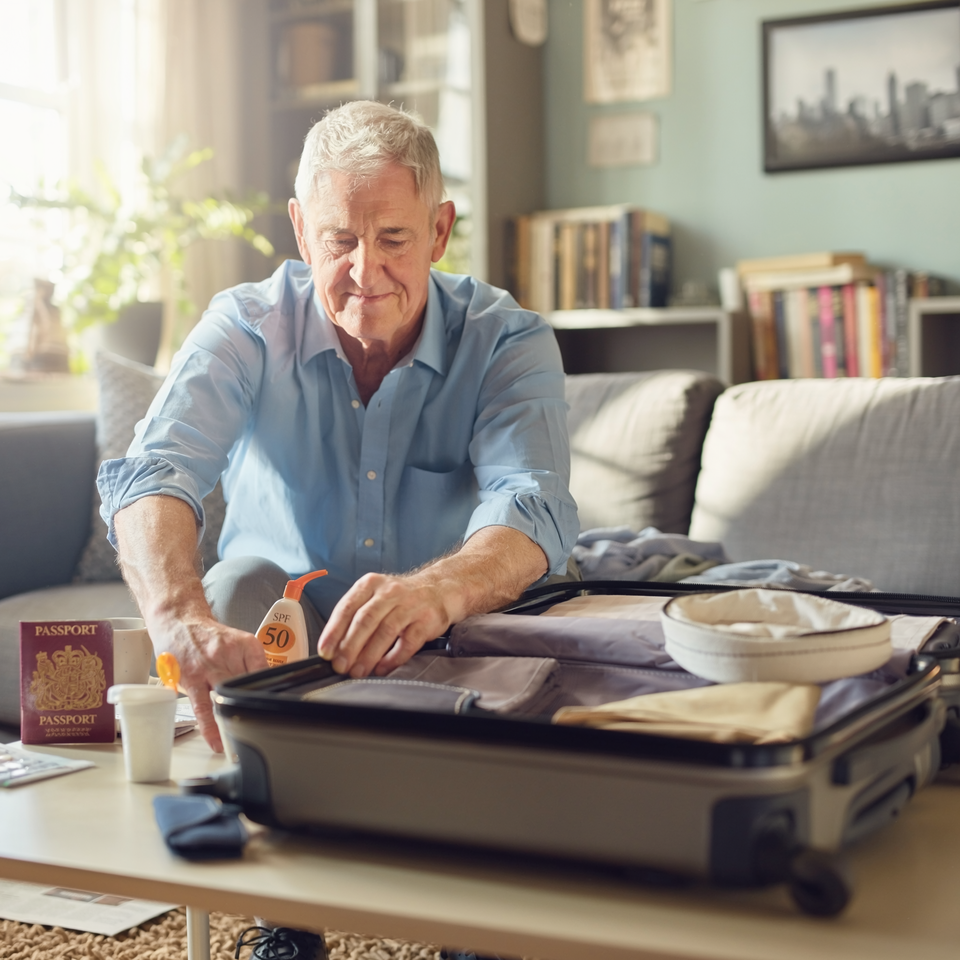
Travel
If you are on the Wegovy pill, travel is easy: a small bottle of tablets, room temperature, no refrigeration, no airline declaration, no doctor's letter required. The only thing to keep up is the morning routine, which time-zone changes can complicate. Take the tablet on local-morning time at the new destination; the 30-minute window is what matters, not the calendar day.
The rest of this section is about travelling with the injectables.
Travelling with injectable medication is manageable with a little planning.
Within the UK: no special paperwork. Keep your pen in its box with the pharmacy dispensing label. If you are flying, put it in hand luggage (hold-luggage temperatures in the cargo hold can drop low enough to damage the medication).
International travel: carry a letter from your clinician confirming the medication, dose, and why you are carrying it. We provide this at no extra cost. Keep the pen in its original box with the label. Pack in hand luggage. Most airlines allow GLP-1 pens without additional notice, but some airlines require advance declaration; check before booking.
Refrigeration: your pen is fine at room temperature for up to 4 weeks after the first opening. For shorter trips (under 4 weeks) no refrigeration is needed in transit. For longer trips, travel with a small insulated bag plus ice packs; a pharmacy can advise on medication travel bags.
Time zone shift: your weekly injection day can shift with you. If you travel west and want to keep Sunday as your injection day, inject at the local time equivalent of your usual UK time.
Sharps disposal abroad: take a small empty sharps bin with you if the trip is longer than one injection cycle.
Security: if asked about the pen at airport security, "this is a prescription medication and I have a doctor's letter" resolves almost every situation.
Running low on medication while travelling
If you are away from the UK and your supply is running short, we can arrange:
Reissuing a prescription via our telehealth service, which a partner pharmacy in your destination country can dispense (availability depends on country).
Posting a pen to your destination address by tracked courier.
Extending your current dose by one week to cover the trip, within reason.
Plan ahead if possible. Do not leave for a 3-week trip with only 2 pens.
What to tell your dentist, surgeon, or anaesthetist
If you have planned surgery, your anaesthetist needs to know. Slowed gastric emptying can affect general anaesthetic safety (risk of aspiration). Current UK guidance (RCOA 2024) is to hold the medication for one week before elective surgery and confirm with your surgical team.
For dental procedures this is rarely a concern unless you are having sedation.
The honest bottom line
Food habits change for the better if you use the window well. Alcohol often reduces naturally. Travel is easy with a letter and some planning. Surgery is the one scenario that needs specific coordination with your surgical team, and we help coordinate that.
Begin your assessment with our weight management doctors.
Wondering what this means for you? We can help. Talk to a doctor about weight loss.
)
)
)
Explore everything about weight loss
)
How GLP-1 medications work
)
Mounjaro vs Wegovy
)
Who benefits from weight-loss medication
NHS vs private weight-loss medication
Titration on Mounjaro
)
Titration on Wegovy
)
Injecting safely
)
Microdosing GLP-1 medicines: an honest picture
)
Gallbladder, pancreatitis and other risks
)
Stopping GLP-1 medication safely
)
GLP-1 medication, pregnancy and fertility
)
Saxenda (liraglutide)
)
Orlistat (Xenical)

Ultra-processed food and why it matters for weight
)
Retatrutide: the next-generation weight loss medication

When will retatrutide be available in the UK
)
Mounjaro, Wegovy or the Wegovy pill: injection or daily tablet
Ready to start?
If this article has made you think medication might help, the next step is a short consultation with one of our weight-management doctors.
Begin your assessment at this link. Online in 30 minutes, or in person at Westfield London.