Opening mid-June at Westfield London. Register your interest to be first to know. Email us
The Health Tech Industry Has a Honesty Problem
We've reviewed the evidence on 50+ wearables and health devices. Some work. Many don't. Here's what matters.
Health | Care | Convenience

Just Because a Device Measures Something Doesn't Mean That Measurement Matters
The global wearables market is worth over £50 billion. Everyone's wearing something - a smartwatch, a ring, a patch. The question is: does it improve your health?
Some health tech has strong clinical evidence. Home blood pressure monitors improve cardiovascular outcomes. Pulse oximeters save lives in people with respiratory conditions.
But for every validated medical device, there are a dozen gadgets promising to 'optimise your health' based on metrics that don't predict anything meaningful.
We've applied the same evidence-based approach we use for supplements and medications. Every device on this page has been reviewed against clinical research.
%20--%3e%3cdefs%3e%3cstyle%3e%20.st0,%20.st1,%20.st2%20{%20fill:%20%2300576e;%20}%20.st0,%20.st3%20{%20opacity:%20.4;%20}%20.st4%20{%20opacity:%20.6;%20}%20.st5%20{%20opacity:%20.3;%20}%20.st2,%20.st6%20{%20opacity:%20.2;%20}%20.st7%20{%20opacity:%20.1;%20}%20%3c/style%3e%3c/defs%3e%3cg%20class='st4'%3e%3cpath%20class='st1'%20d='M0,166.75v41.68'/%3e%3c/g%3e%3cpath%20class='st1'%20d='M0,125.07v41.68'/%3e%3cpath%20class='st1'%20d='M0,83.38v41.69'/%3e%3cpath%20class='st1'%20d='M0,41.69v41.69'/%3e%3cg%20class='st6'%3e%3cpath%20class='st1'%20d='M41.74,166.75v41.68H0v-41.68s41.73,0,41.73,0Z'/%3e%3c/g%3e%3cg%20class='st7'%3e%3cpath%20class='st1'%20d='M41.74,125.07v41.68H0v-41.68s41.73,0,41.73,0Z'/%3e%3c/g%3e%3cpath%20class='st0'%20d='M41.74,83.38v41.69H0v-41.69s41.73,0,41.73,0Z'/%3e%3cg%20class='st5'%3e%3cpath%20class='st1'%20d='M41.74,41.69v41.69H0v-41.69s41.73,0,41.73,0Z'/%3e%3c/g%3e%3cg%20class='st3'%3e%3cpath%20class='st1'%20d='M41.74,0v41.69H0V0s41.73,0,41.73,0Z'/%3e%3c/g%3e%3cpath%20class='st0'%20d='M83.46,125.07v41.68h-41.73v-41.68h41.73Z'/%3e%3cg%20class='st5'%3e%3cpath%20class='st1'%20d='M125.2,83.38v41.69H41.74v-41.69h83.46Z'/%3e%3c/g%3e%3cpath%20class='st2'%20d='M83.46,41.69v41.69h-41.73v-41.69h41.73Z'/%3e%3cg%20class='st7'%3e%3cpath%20class='st1'%20d='M83.46,0v41.69h-41.73V0h41.73Z'/%3e%3c/g%3e%3cg%20class='st5'%3e%3cpath%20class='st1'%20d='M125.2,0v41.69h-41.73V0h41.73Z'/%3e%3c/g%3e%3cg%20class='st5'%3e%3cpath%20class='st1'%20d='M166.96,41.69v41.69h-41.77v-41.69h41.77Z'/%3e%3c/g%3e%3c/svg%3e)
How it works
We categorise wearables into three groups based on clinical evidence and real-world impact.
Green light
Strong clinical evidence. Improves outcomes or detects real problems.
Yellow light
Some evidence. Useful if used correctly, but easy to waste money on.
Red light
No meaningful evidence. Expensive gadgets that don't drive health decisions.

Reviewed Wearables & Health Devices
We’ve reviewed the clinical evidence for the most popular devices. Here's what works and what doesn't.
Frequently asked questions
Related services
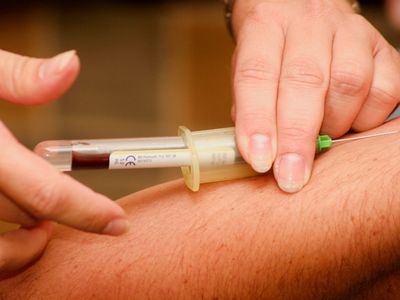
Blood Testing
Objective health data from blood work. More reliable than wearable metrics for most health questions.

Cardiovascular Risk Screening
If hypertension runs in your family, a validated home BP monitor combined with risk assessment is smart.

Sleep Optimisation
Real sleep science involves more than wearable tracking. We help you rebuild healthy sleep architecture.
Looking for something else?