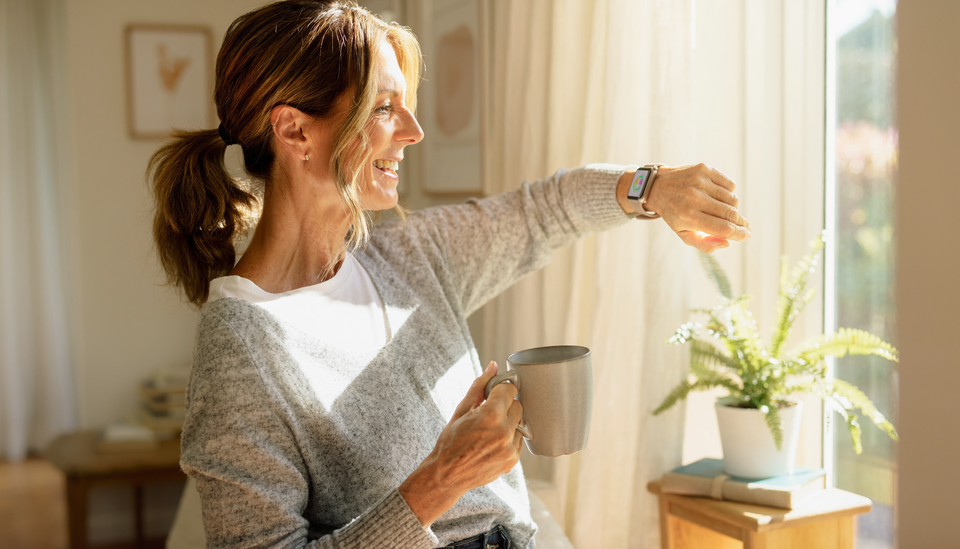
Using your wearable to improve your sleep
What Apple Watch, Oura, Garmin and Whoop actually measure, what they miss, and how to use them productively.
Wondering what this means for you? We can help. Talk to a doctor about sleep.
Consumer sleep wearables have genuinely improved over the past five years. They are not diagnostic tools, but for tracking patterns over months and for nudging behaviour change, they are useful. This article describes what each major device does well, what they miss, and how we use wearable data as part of sleep care.
What wearables measure
All consumer sleep wearables measure some combination of:
- Heart rate, continuously - Heart rate variability (HRV), usually during sleep - Movement, via accelerometer - Skin temperature (Apple Watch, Oura, some newer Garmin) - Blood oxygen saturation estimation (most premium models)
From these, they infer: time in bed, estimated sleep time, estimated sleep stages (light, deep, REM), sleep efficiency, resting heart rate during sleep, HRV during sleep, and variously a "sleep score" or "readiness score".
None of them directly measure airflow or actual breathing. This matters because apnoea diagnosis depends on airflow, and wearables cannot detect it reliably.
What they are good at
Consistency tracking. If you want to know whether you are really going to bed at a consistent time, a wearable tracks it objectively. Self-reported bedtime is often off by 30 to 60 minutes vs actual sleep onset.
Trends over weeks and months. If you are making a change (caffeine cut-off earlier, exercise timing, alcohol reduction), a wearable makes the trend visible. A week of better HRV or longer deep sleep is encouraging and keeps the behaviour going.
Subjective feeling correlation. Most wearables let you score how you feel in the morning. Over time, you learn which metrics matter for your sense of rest - it is not always total sleep time; some people's restfulness tracks more with deep sleep proportion, others with heart rate during sleep.
Recovery and training load. If you train seriously, wearables help identify under-recovery before it becomes injury or illness. Whoop in particular is built around this.
Stress visibility. HRV drops during stressful periods; wearables show this objectively. Useful for knowing whether a tough week is affecting recovery physiologically, not just psychologically.
What they are bad at
Apnoea detection. Most wearables flag "breathing disturbances" based on oxygen saturation dips or motion patterns, but their sensitivity and specificity are far below clinical tools. A negative wearable flag does not exclude apnoea. A positive wearable flag is worth investigating but not diagnostic.
Accurate sleep staging. Consumer-wearable sleep-stage estimates are inferred from heart rate, movement, and temperature patterns. They differ substantially from polysomnographic gold standard, particularly for REM versus light sleep distinction. Useful for trend tracking; not useful for clinical decisions.
Total sleep time accuracy. Better than they used to be but still typically off by 15 to 30 minutes vs actual. Apple Watch tends to over-estimate; Oura and Whoop are closer to ground truth. All get more accurate with consistent wear.
Insomnia insight. If you are awake in bed, most wearables record you as asleep because you are not moving. This can mask the actual insomnia picture. Subjective report remains important.
Differentiating poor sleep from a sleep disorder. Wearable data alone cannot tell you whether poor sleep is apnoea, insomnia, circadian misalignment, or just a bad week. Clinical assessment still matters.
How we use wearable data in clinic
At first consultation, if you have wearable data, we ask you to share a month's worth via screenshots or exports. We look for: consistency of bedtime and waketime, total sleep time trends, heart rate patterns overnight (elevated resting HR during sleep can suggest poor recovery or apnoea), HRV trends, any flagged disturbances.
We do not use wearable data for diagnosis. We use it as context for the clinical history and for follow-up tracking.
After assessment and treatment, wearable data becomes more useful. For CPAP users, the device's own data (AHI, mask leak, hours of use) is gold standard - wearables confirm the subjective improvement. For CBT-I patients, wearables show the sleep consolidation that is the goal of the treatment. For patients optimising a lifestyle change, wearables provide objective evidence that the change is working.
What each platform does best
Apple Watch. Strong ecosystem integration. Sleep stages, overnight breathing disturbance estimates, overnight skin temperature, blood oxygen. Comfortable for most sleepers. Not the most accurate but the most frictionless if you already use iPhone.
Oura Ring. Purpose-built for sleep. Worn as a ring, not a watch. Excellent temperature and HRV tracking. Strong readiness metrics. Requires subscription alongside the ring. Probably the most accurate consumer sleep tracker for staging.
Whoop. Recovery-focused, subscription-only. Strongest training integration. 24/7 wear. Good HRV, good sleep duration. Less good at stage differentiation.
Garmin. Varies by model. Higher-end Garmins (Forerunner, Fenix, Epix) provide good sleep data alongside running/cycling metrics. Useful for athletes.
Fitbit. Budget-friendly, good basics, less analytical depth.
Non-wearable options. Under-mattress devices (Withings Sleep Analyzer, Eight Sleep Pod) track without needing to wear anything. Less convenient to move; useful if you travel often in the same bed.
How to use wearable data productively
Do not obsess over single nights. One bad score tells you about one night. The trend over two weeks tells you about your sleep.
Pay attention to the metrics that correlate with how you feel. Different people feel rested with different patterns. Find yours.
Use it for behavioural feedback. Note alcohol nights vs non-alcohol; late-caffeine vs no late-caffeine; post-exercise vs rest. Your sleep shows the difference reliably.
Do not use it for diagnosis. If a wearable flags "possible breathing disturbance", take it seriously enough to get an assessment. If it says everything is fine but you feel unrested, still take that seriously.
Do not let it become another source of sleep anxiety. Some patients develop "orthosomnia" - anxiety about sleep scores. If the wearable is making you stressed about sleep, the device is no longer helping.
What to do with a wearable that flags concerns
The single most useful thing wearable data can do for a sleep-concerned patient is prompt a proper assessment. If your wearable has shown consistently poor sleep metrics, elevated overnight heart rate, dropping oxygen saturation, or flagged breathing events, that is a real prompt for investigation. Bring the data to your consultation.
The honest bottom line
Wearables are useful adjuncts, not diagnostic tools. They are good for tracking, accountability, and trend awareness. They are not good for detecting apnoea or for telling you your sleep architecture accurately. Use them for what they are good at and get proper clinical assessment for the rest.
Wearables are not a substitute for a sleep study
A good Apple Watch or Oura will flag that your sleep is bad. They will not tell you whether you have sleep apnoea. Heart-rate variability dips, oxygen-saturation dips, and snore-detection are suggestive but not diagnostic. If your wearable flags apnoea risk, we use the WatchPAT One home sleep test as the diagnostic next step. One night, your own bed, AHI, REM-AHI, oxygen desaturation index, body position, and central-versus-obstructive breakdown. Results within 48 hours, reviewed with you.
Wearables are good for behaviour change. They are not good enough for medical diagnosis. Use both layers.
Wondering what this means for you? We can help. Talk to a doctor about sleep.
)
)
)
Explore everything about sleep
)
Sleep apnoea: how to tell if you have it
)
Beyond apnoea: insomnia, circadian, RLS
)
Sleep in men and women, age by age
)
Snoring and upper-airway health
)
NHS vs private sleep apnoea pathway
)
What happens in a WatchPAT One test
CPAP vs MAD vs surgery
)
Meditation, music and sleep apps: the honest evidence
)
A sleep study without the sleep lab
)
Making sense of your sleep study results
)
Melatonin: when it helps
)
UK insomnia medications honestly
Sleep apnoea and the DVLA

Z-drugs and benzos: what to know
)
Cardiovascular and metabolic risks of untreated apnoea
Ready to start?
If this article has made you think our assessment might help, the next step is a short consultation with one of our sleep-medicine doctors.
Begin your assessment at this link. Online with a WatchPAT One home study, or in person at Westfield London.